Everything you need to know about diaper changes, keeping your little guy clean, and avoiding common messes.
Bringing your baby boy home is one of the most incredible moments in life. And then comes the first diaper change. Suddenly, you’re standing there with a dirty diaper in one hand, a wipe in the other, and absolutely no clue what you’re doing. If that sounds familiar, don’t worry. You’re not alone. Every new parent has been there.
The good news? Learning how to wipe a baby boy the right way isn’t nearly as hard as it feels in that first panicked moment. This guide will walk you through everything you need to know. No confusing medical terms. No fluff. Just clear, practical advice to help you handle diaper changes like a pro.
Why Cleaning the Right Way Matters
It might seem like just a diaper change, but how you clean your baby boy actually makes a big difference. His skin is sensitive. Really sensitive. Urine contains ammonia, which can cause irritation if it’s not fully wiped away. Stool that gets left behind in skin folds can lead to bacterial growth or a painful rash.
According to the CDC, babies should be cleaned thoroughly at every change using a front-to-back motion. UCSF Benioff Children’s Hospitals also points out that parents change around 3,000 diapers in the first year alone. That’s a lot of chances to get it right. Developing good habits early means fewer rashes, fewer infections, and a happier baby overall.
What to Have Ready Before You Start
Before you lay your baby down, make sure everything you need is within arm’s reach. Never leave your baby unattended on a changing table, even for a second. Newborns can surprise you with sudden rolls.
Here’s what you’ll want nearby:
- A clean diaper in the correct size
- Fragrance-free, hypoallergenic wipes (or a soft washcloth with warm water)
- Diaper cream or zinc oxide ointment (if needed)
- A changing pad or soft mat on a flat surface
- A diaper pail or small trash bag
- A clean wipe or cloth to cover your baby boy’s penis during the change
Pro tip: Warm the wipe in your hands for a few seconds before using it. Cold wipes on a warm belly are a surefire way to turn a calm moment into tears.
Step-by-Step: How to Wipe a Baby Boy After a Diaper Change
Follow these simple steps, and you’ll have a clean, comfortable baby in no time.
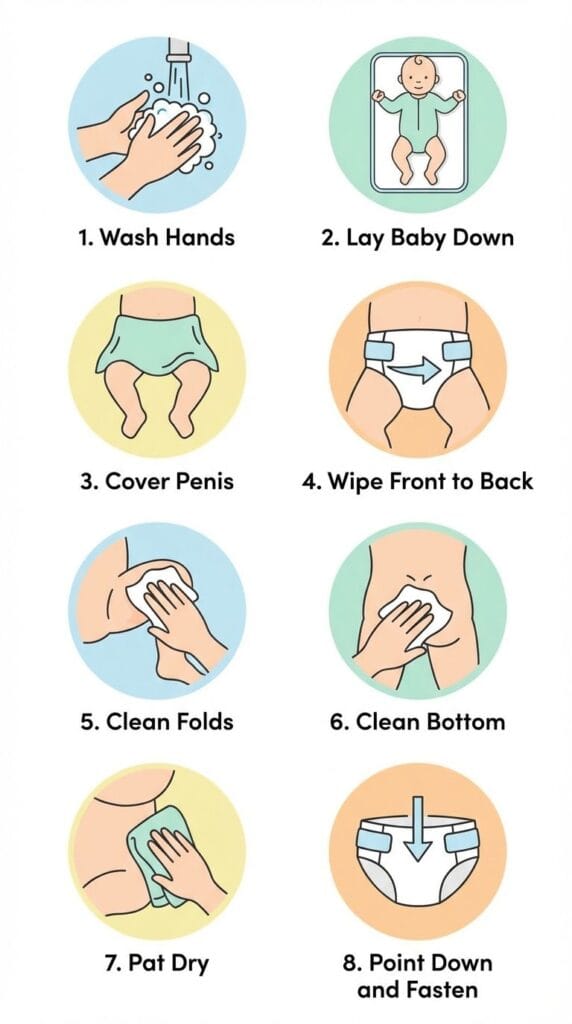
Step 1: Wash Your Hands
Always start with clean hands. This helps prevent bacteria from spreading and keeps your baby safe from infection.
Step 2: Lay Your Baby on a Safe Surface
Place your baby on the changing pad. If you’re using an elevated table, keep one hand on him at all times. Some parents prefer changing diapers on the floor with a portable mat. It’s the safest option since there’s no risk of falling.
Step 3: Cover Before You Open
Here’s a trick that will save your clothes: before you open the dirty diaper, place a clean wipe or cloth over your baby boy’s penis. The moment cold air hits, many baby boys pee. It’s a reflex. That little stream can travel farther than you’d expect. Keeping it covered is just smart parenting.
Once the cover is in place, undo the diaper tabs and fold the front down. If there’s stool, use the front of the diaper to wipe away as much as possible before setting it aside.
Step 4: Wipe from Front to Back
Gently lift your baby’s legs by holding both ankles with one hand. With the other hand, use a fresh wipe and clean from front to back. Start at the base of the penis and move toward the bottom. This direction matters because wiping the other way can push bacteria toward the urethra and cause a urinary tract infection.
Step 5: Clean the Penis, Scrotum, and Skin Folds
This is where a lot of parents rush or miss spots. Gently lift the penis and wipe underneath. Clean the scrotum carefully, including the folds where moisture can hide. Use as many wipes as you need. Don’t try to make one wipe do all the work.
If your baby is uncircumcised, do not pull back the foreskin. It’s naturally attached and will retract on its own over time. Forcing it can cause pain or injury. Just wipe gently around the outside.
Step 6: Clean the Bottom and Between the Cheeks
Once the front is clean, move to the back. Lift his legs a little higher and wipe from the perineum toward the buttocks. Make sure to clean between the cheeks, too. Stool can easily travel there, especially with newborns who have frequent, runny stools. Missing this spot is one of the most common mistakes parents make.
Step 7: Pat Dry Before Putting on a New Diaper
This step often gets overlooked. Before you put on a fresh diaper, pat the area dry with a soft cloth or let it air out for a few seconds. Sealing in moisture is a leading cause of diaper rash. If the skin looks a little red, apply a thin layer of diaper cream as a barrier.
Step 8: Point Down, Fasten, and You’re Done
Before you close the diaper, make sure your baby’s penis is pointing downward. If it’s pointing up, leaks are almost guaranteed right through the waistband. Point it down, fasten the tabs snugly (you should be able to fit two fingers under the waistband), and pull out the leg cuffs so they sit comfortably. Done.
Throw away the dirty diaper and wipes, wipe down the changing surface, and wash your hands again.
Common Mistakes Parents Make (and How to Avoid Them)
Even the best parents fall into a few bad habits. Here are the ones to watch out for:
- Using wipes with alcohol, fragrance, or harsh chemicals. Baby skin is sensitive. Stick with fragrance-free, hypoallergenic wipes.
- Skipping the skin folds. The creases around the scrotum and thighs trap moisture. Not cleaning them is a fast track to a rash.
- Putting a diaper on damp skin. Moisture trapped under a diaper leads to irritation. Always pat dry first.
- Leaving a soiled diaper on too long. Both urine and stool can irritate skin quickly. Change your baby as soon as you know he’s wet or dirty.
- Not covering the penis before opening the diaper. It sounds funny until it happens to you. Always have a cover ready.
- Forgetting to aim down. Seriously. This one simple habit will save you from countless outfit changes.
Tips to Prevent Diaper Rash in Baby Boys
Diaper rash is common, but it’s also preventable. Here’s what works:
- Change diapers often. Newborns usually need a change every two to three hours. Don’t wait until the diaper is full.
- Use a barrier cream. You don’t have to wait for a rash. A thin layer of zinc oxide or petroleum jelly at each change protects the skin.
- Let the skin breathe. A few minutes of diaper-free time each day can do wonders. Lay him on a soft cloth and let the air flow.
- Check diaper size. A diaper that’s too small causes friction. One that’s too big leaks. Babies grow fast, so check the fit often.
- Switch products if rashes keep coming back. Some babies react to certain materials. If rashes are frequent, try a different brand of wipes or diapers.
If a rash develops blisters, bleeds, or doesn’t improve after a few days of home care, call your pediatrician. Some rashes are caused by yeast and need a different kind of treatment.
Frequently Asked Questions
How often should I clean my baby boy during diaper changes?
Every single time. Even if the diaper is just wet. Urine can irritate skin quickly, and stool left behind can cause infection. There’s no such thing as too clean when it comes to diaper changes.
Should I clean under my baby boy’s foreskin if he’s uncircumcised?
No. Do not pull back the foreskin. It will retract naturally over time. Forcing it can cause pain and injury. Just wipe gently around the outside.
What wipes are best for a baby boy’s sensitive skin?
Look for wipes that are fragrance-free, alcohol-free, and hypoallergenic. Thicker wipes are easier to use and clean better. For very sensitive skin, try a soft washcloth with warm water. Avoid anything with parabens, alcohol, or synthetic fragrances.
How do I stop my baby boy from peeing during a diaper change?
You can’t really stop it. It’s a reflex. But you can contain it. Keep a wipe or cloth over his penis until the clean diaper is in place. That simple trick works every time.
How do I know if my baby boy has a diaper rash infection?
A standard diaper rash looks red and irritated and usually improves within a couple of days with cream and care. If the rash is bright red with raised edges, spreads beyond the diaper area, or has blisters or pustules, it could be a yeast or bacterial infection. Call your pediatrician if it doesn’t improve after 48 to 72 hours.
Final Thoughts
Diaper changes can feel overwhelming at first, but they quickly become second nature. Learning how to wipe a baby boy the right way comes down to a few simple habits: keep a cover handy, wipe front to back, clean every fold, pat dry, and always aim down. Repeat that a few hundred times, and you’ll be a pro.
Every parent has been through a mid-change surprise. It’s part of the journey. The difference between a stressful change and a smooth one is usually just a little preparation. And now you’ve got everything you need.
Good luck. You’ve got this.