Not every face moisturizer works for every person. That might sound obvious, but it is something a lot of people learn the hard way. You pick up a jar that a friend loves, slap it on your face, and two days later your skin is either breaking out or peeling like old paint. The reason is simple: skin types are different, and what works beautifully for one person can do real damage to another.
The good news is that finding the right natural face moisturizer does not have to be expensive or complicated. There are plenty of affordable skin care options that are gentle, effective, and made with ingredients you can actually pronounce. This guide breaks it all down by skin type so you can stop guessing and start seeing real results.
Why Natural Face Moisturizers Are Worth the Switch
Most conventional moisturizers are loaded with synthetic fragrances, parabens, and chemical preservatives. For some people, those additives cause redness, breakouts, or long-term irritation. Natural face moisturizers tend to use plant-based ingredients, oils, and botanical extracts that work with your skin rather than against it.
That does not mean every product labeled “natural” is automatically good. Some brands use the term loosely. The best approach is to look at the ingredient list and understand what you are putting on your face. When you know what your skin needs, shopping for the right face cream becomes a lot easier.
Quick tip: The shorter and simpler the ingredient list, the easier it is to figure out what your skin is actually reacting to.
How to Identify Your Skin Type
Before you can pick the right natural face moisturizer, you need to know your skin type. Here is a simple way to figure it out at home. Wash your face with a gentle face cleanser and do not apply anything afterward. Wait about an hour, then look at your skin in a mirror.
If your skin looks shiny all over, you probably have oily skin. If it feels tight and looks dull or flaky, you likely have dry skin. If your forehead and nose are oily but your cheeks feel dry, that is combination skin. If your skin looks calm and balanced without much effort, you have normal skin. And if your skin tends to get red or irritated easily, especially with new products, that points to sensitive skin.
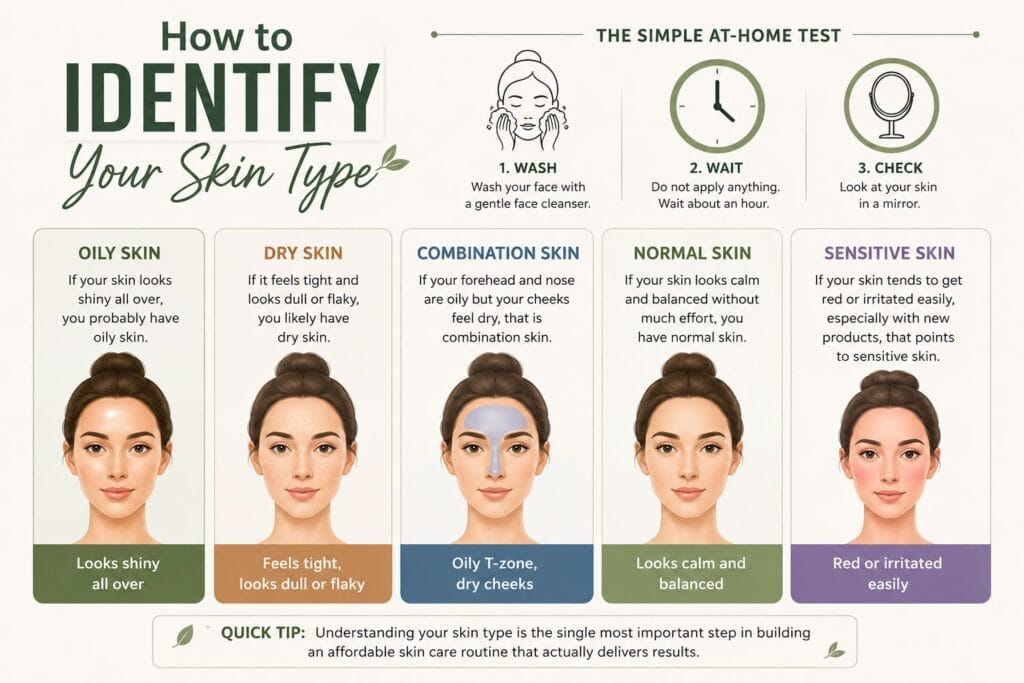
Understanding your skin type is the single most important step in building an affordable skin care routine that actually delivers results.
Best Natural Face Moisturizers by Skin Type
Dry Skin: Go Rich and Nourishing
Dry skin needs serious hydration and a face cream that creates a protective barrier to lock moisture in. Look for ingredients like shea butter, avocado oil, hyaluronic acid, and squalane. These are all naturally derived and work hard to restore softness without causing irritation.
Shea butter is one of the most reliable ingredients for dry skin. It is packed with fatty acids that seal in moisture for hours. Avocado oil goes even further because it also carries vitamins A, D, and E into the skin. If your skin is extremely dry, apply your moisturizer right after washing your face while your skin is still slightly damp. That extra step makes a noticeable difference.
Top ingredient picks for dry skin: shea butter, avocado oil, jojoba oil, hyaluronic acid, rosehip oil, and aloe vera.
Oily Skin: Lightweight and Non-Comedogenic
A lot of people with oily skin skip moisturizer entirely. That is actually one of the worst things you can do. When your skin is stripped of moisture, it overproduces oil to compensate, which makes the problem worse. The key is finding a natural face moisturizer that is lightweight and non-comedogenic, meaning it will not clog your pores.
Look for water-based formulas with ingredients like niacinamide, green tea extract, aloe vera, or witch hazel. These keep skin hydrated without adding extra grease. Avoid heavy butters and thick oils if you have oily or acne-prone skin. A lightweight gel moisturizer with aloe vera and niacinamide is often the sweet spot for this skin type.
Top ingredient picks for oily skin: aloe vera gel, niacinamide, green tea extract, witch hazel, and lightweight hyaluronic acid serums.
Combination Skin: Balance Is Everything
Combination skin is probably the trickiest to shop for because you are essentially dealing with two different skin types at once. The T-zone (forehead, nose, and chin) is oily, while the cheeks can be normal to dry. You have a few options here.
One approach is to use a lightweight gel moisturizer all over and spot-treat the dry areas with a richer face cream. Another option is to find a balanced moisturizer with ingredients that hydrate and control oil at the same time. Jojoba oil is actually ideal for combination skin because its composition closely resembles the skin’s natural sebum, which helps regulate oil production while moisturizing dry patches.
Top ingredient picks for combination skin: jojoba oil, hyaluronic acid, niacinamide, rosehip oil, and light botanical oils.
Sensitive Skin: Less Is More
Sensitive skin reacts to almost everything. Fragrances, essential oils, harsh preservatives, and even some plant extracts can trigger redness, stinging, or breakouts. If this sounds familiar, the golden rule is to keep your face care routine as simple as possible.
Look for unscented, fragrance-free face moisturizers with soothing ingredients like oat extract, centella asiatica (also called cica), chamomile, and ceramides. These calm inflammation and help repair the skin barrier over time. When trying anything new, do a patch test on your inner wrist or behind your ear first and wait 24 hours before applying it to your face.
Top ingredient picks for sensitive skin: oat extract, centella asiatica, chamomile, aloe vera, ceramides, and calendula.
Normal Skin: Maintain What You Have
If you have normal skin, consider yourself lucky. Your skin is already balanced, and your main job is to keep it that way. You have a lot of flexibility when it comes to choosing a natural face moisturizer. Most lightweight to medium-weight formulas will work well for you.
A simple daily routine with a good face cleanser, a hydrating moisturizer with antioxidants, and sunscreen in the morning is usually all you need. Ingredients like vitamin C, green tea extract, and rosehip oil help protect your skin from environmental damage and keep it looking healthy over time.
Top ingredient picks for normal skin: vitamin C, rosehip oil, green tea extract, hyaluronic acid, and light botanical oils.
Do You Need a Face Serum Too?
A lot of people wonder whether they need both a face serum and a face moisturizer. The short answer is no, but using both together can give you better results if you have specific skin concerns like dark spots, fine lines, or uneven texture.
A face serum is typically lighter and more concentrated than a moisturizer. It is designed to deliver active ingredients deep into the skin. A moisturizer, on the other hand, works mainly on the surface to lock in hydration and protect the skin barrier. Think of the serum as the treatment and the moisturizer as the seal.
If you decide to use both, apply your serum first on clean skin, let it absorb for about 30 seconds to a minute, and then follow with your face cream. For people on a budget, a good natural face moisturizer with solid active ingredients can honestly do both jobs on its own.
Building an Affordable Skin Care Routine That Works
Affordable skin care does not mean cutting corners. It means being smart about what you spend money on. You do not need a 10-step routine or a shelf full of products. A simple, consistent three-step routine with quality ingredients will outperform a complicated routine every single time.
In the morning, start with a gentle face cleanser that does not strip your skin. Then apply a lightweight natural face moisturizer, and finish with a broad-spectrum SPF 30 or higher. At night, cleanse again to remove dirt, makeup, and the day’s pollution, then apply a slightly richer moisturizer or a nourishing face serum if needed.
One thing that is worth spending a little more on is your face cleanser. A harsh, cheap cleanser can undo all the work your moisturizer is doing. Look for sulfate-free formulas that maintain your skin’s natural pH balance. Everything else in your routine will perform better when your skin is not being stripped twice a day.
Affordable does not have to mean drugstore or luxury. Many mid-range brands with clean ingredient lists offer excellent face creams for under $25.
Ingredients to Avoid in Natural Face Moisturizers
Even products marketed as natural can contain ingredients that are not ideal for your skin. Here are a few things worth avoiding, especially if your skin is sensitive or prone to breakouts.
Synthetic fragrances are one of the most common causes of skin irritation. They are found in a huge number of beauty products and rarely serve any skin care purpose. If a label just says “fragrance” without specifying the source, that is usually synthetic. Alcohol is another ingredient to watch for. Some alcohols are fine in small amounts, but denatured alcohol and isopropyl alcohol can be very drying and disruptive to your skin barrier.
Parabens, which are used as preservatives, have been a topic of debate for years. While research is still ongoing, many people prefer to avoid them as a precaution. Finally, essential oils, though natural, can be irritating for people with sensitive or reactive skin. Even lavender and tea tree, which are commonly marketed as calming, can cause contact dermatitis in some individuals.
How Often Should You Moisturize?
Most dermatologists recommend moisturizing at least twice a day, once in the morning and once at night. If you wash your face in the middle of the day, apply a small amount of moisturizer afterward to keep your skin barrier intact.
People with dry skin may want to apply a thin layer more frequently, especially during winter when indoor heating pulls moisture out of the air. People with oily skin might prefer to moisturize only once at night and skip the morning application, or use a very light formula in the morning.
The timing matters too. Applying your natural face moisturizer within a few minutes of washing your face, while your skin is still slightly damp, helps seal in extra hydration. That simple habit can make a real difference in how soft and plump your skin looks over time.
Frequently Asked Questions
Can I use the same face cream in the morning and at night?
Yes, many natural face moisturizers are designed for all-day use. However, your skin has different needs at different times. In the morning, a lighter formula with antioxidant protection works best. At night, a richer cream or one with repairing ingredients like peptides or retinol is more beneficial because your skin does its repair work while you sleep.
Is coconut oil a good natural face moisturizer?
Coconut oil works well as a body moisturizer but is not ideal for everyone’s face. It is highly comedogenic, meaning it can clog pores for many people, especially those with oily or acne-prone skin. If you love natural oils, try rosehip oil, jojoba oil, or squalane instead. They are lighter and far less likely to cause breakouts.
How long does it take to see results from a new face moisturizer?
Most people notice an immediate improvement in softness and hydration within the first few uses. For deeper changes like reduced fine lines, more even skin tone, or better texture, give a product at least four to six weeks of consistent daily use before judging its effectiveness.
Can men use natural face moisturizers?
Absolutely. Good face care is not gender-specific. Men actually tend to have slightly thicker and oilier skin on average, so a lightweight, non-comedogenic natural face moisturizer is usually a great starting point. The same skin type principles apply regardless of gender.
Final Thoughts
Finding the best natural face moisturizer for your skin type does not require a big budget or a complicated routine. What it does require is a little knowledge about your own skin and a willingness to read ingredient labels. Once you match the right ingredients to your skin type, the difference can be remarkable.
Whether you have dry, oily, combination, sensitive, or normal skin, there is an affordable skin care solution that will work for you. Start simple, stay consistent, and give your skin the time it needs to respond. Your face care routine does not need to be expensive to be effective. It just needs to be right for you.
At WellnessSip, we believe that real skin health comes from understanding your body, not from spending a fortune on products. Good face care is an act of self-care, and everyone deserves to feel confident in their own skin.