Oral minoxidil is often stronger, but topical minoxidil has fewer systemic risks.
I have treated many patients and reviewed clinical data on Oral vs. Topical Minoxidil: Which Is Better for Hair Loss and side effects. This guide explains how each form works, who benefits most, safety concerns, dosing practicalities, and real-world tips. Read on to make a safe, informed choice about minoxidil for hair loss.

How minoxidil works and why form matters
Minoxidil started as a blood pressure drug but later proved to help hair. It opens potassium channels and increases blood flow near follicles. This can lengthen the anagen (growth) phase and boost hair thickness. The route of delivery affects how much drug reaches the scalp and the whole body, which shapes both benefit and risk in Oral vs. Topical Minoxidil.
Oral vs. Topical Minoxidil: overview
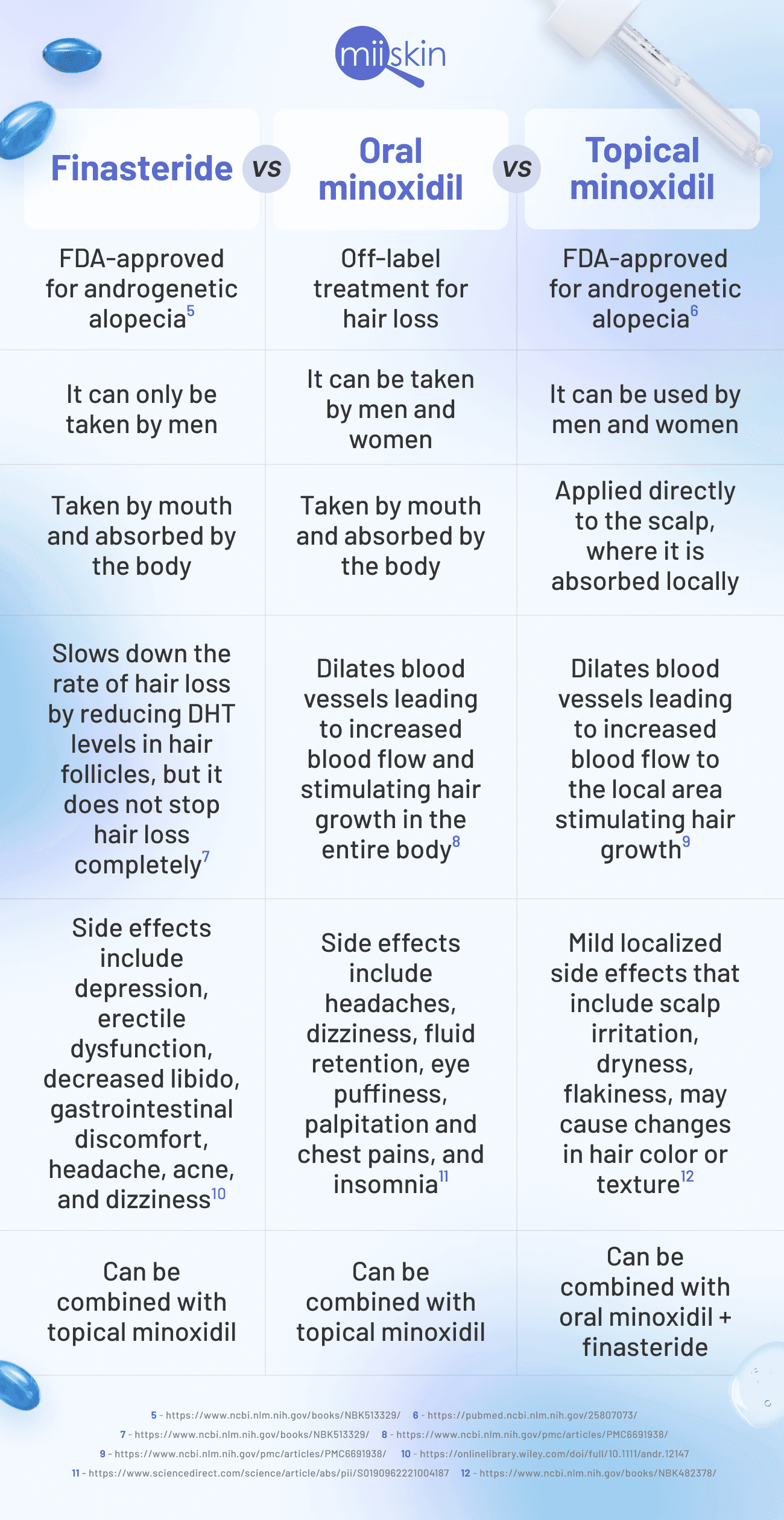
Oral vs. Topical Minoxidil differs by absorption, potency, and side effect profile.
Topical minoxidil
- Applied directly to the scalp as solution or foam.
- Common strengths: 2% and 5%.
- Low systemic absorption in most people.
- Good first-line option for androgenetic alopecia and early thinning.
Oral minoxidil
- Taken by mouth in low doses for hair loss (off-label).
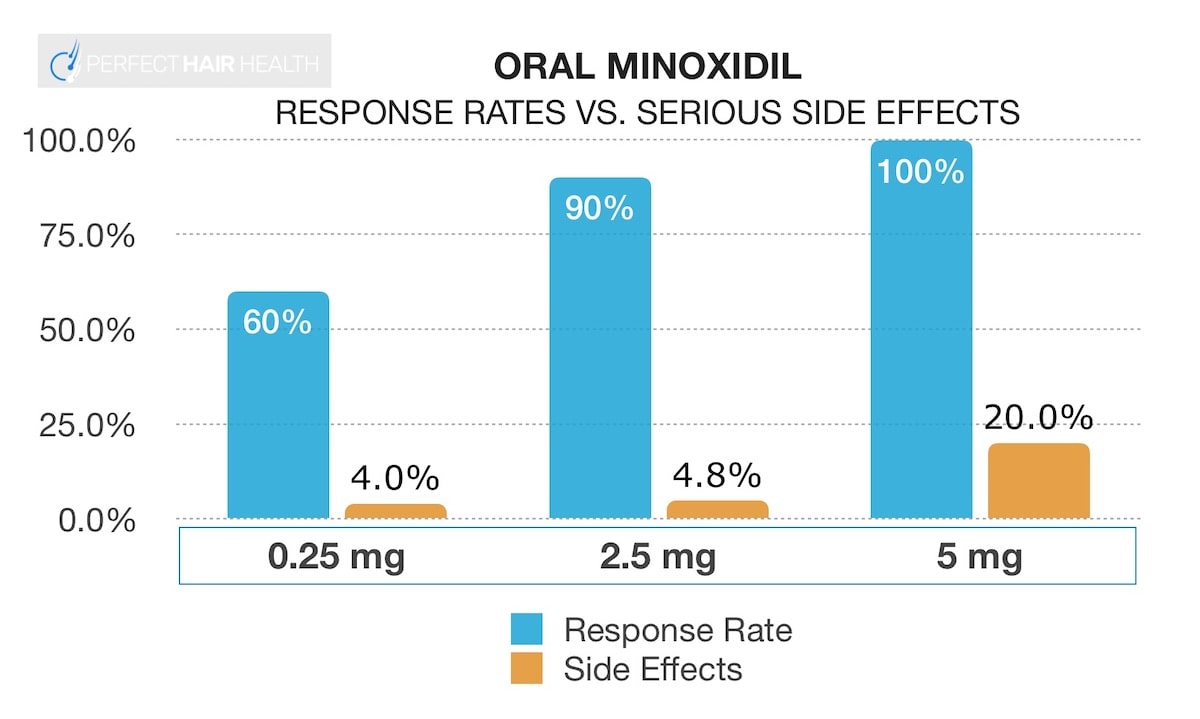
- Doses often range from 0.25 mg to 5 mg daily.
- Higher systemic exposure than topical forms.
- Considered when topical therapy fails or causes scalp intolerance.
Key practical differences
- Efficacy often favors oral in resistant cases. Oral vs. Topical Minoxidil shows stronger systemic exposure with oral use.
- Safety leans toward topical due to fewer systemic effects.
- Convenience and adherence vary by patient preference and tolerance.
Effectiveness: which promotes more hair growth?
Clinical experience and trials suggest that both forms can produce visible benefit. Topical minoxidil helps many people stabilize shedding and gain density within 4–6 months. Oral minoxidil at low doses can produce faster or greater hair regrowth in some patients who did not respond to topical treatment.
Factors that influence results
- Severity and type of hair loss: longstanding bald areas respond less well.
- Dose and consistency: missing doses reduces benefit.
- Combination therapy: using topical or oral minoxidil with finasteride often improves outcomes.
Practical example
- A patient with moderate scalp thinning may respond well to 5% topical once or twice daily.
- A patient who fails topical therapy or cannot tolerate scalp irritation may try low-dose oral minoxidil under medical supervision.

Side effects and safety profile
Safety is the main trade-off when weighing Oral vs. Topical Minoxidil.
Topical side effects
- Scalp irritation, itching, or contact dermatitis.
- Unwanted facial or body hair if excess product spreads.
- Rare systemic effects in sensitive individuals.
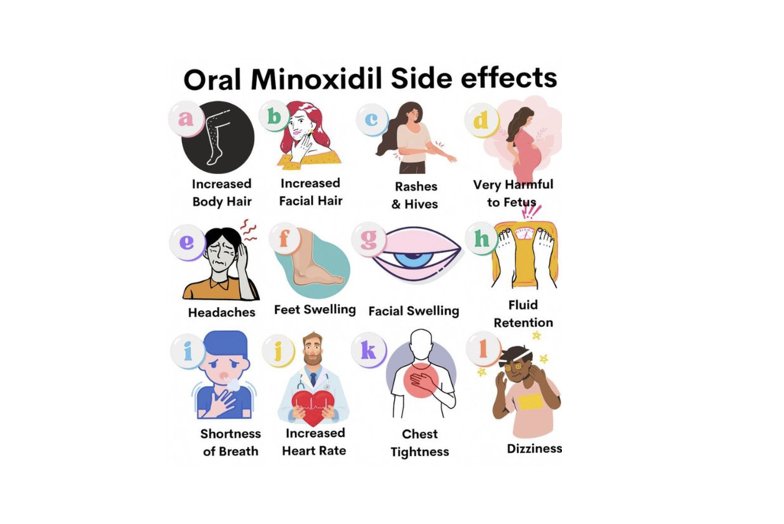
Oral side effects
- Fluid retention and peripheral edema.
- Increased heart rate and possible palpitation.
- Blood pressure changes, sometimes requiring monitoring.
- Widespread hypertrichosis (excess hair growth) beyond the scalp.
- Caution: Some strokes has been reported.
Monitoring recommendations for oral use
- Check blood pressure before starting and periodically after.
- Monitor heart rate and watch for swelling or shortness of breath.
- Start at a low dose and increase slowly under a clinician’s care.
Who should choose oral versus topical minoxidil?
Oral vs. Topical Minoxidil choice depends on medical history, goals, and risk tolerance.
Choose topical if
- You prefer low systemic risk.
- You have mild to moderate hair thinning.
- You are pregnant, breastfeeding, or planning pregnancy (topical still requires caution; consult a clinician).
Choose oral if
- Topical therapy failed or caused severe scalp reactions.
- You seek a stronger systemic effect and accept higher monitoring needs.
- You have no heart disease, hypertension issues, or fluid retention problems.
Contraindications and precautions
- Avoid oral minoxidil in uncontrolled heart disease and severe hypertension.
- Use caution with medications that affect blood pressure.
- Always discuss pregnancy plans with your clinician.
Dosing, application, and practical tips
Clear steps make either form safer and more effective.
Topical tips
- Apply to dry scalp once or twice daily as directed.
- Use the foam if the solution irritates your scalp.
- Wash hands after application to avoid extra hair growth on fingers.
Oral tips
- Start very low and titrate upward. Typical low-dose ranges are 0.25–5 mg daily.
- Take with food if it eases stomach upset.
- Arrange baseline vital signs and periodic checks with your clinician.
Adherence and expectations
- Expect 3–6 months to see changes, and up to 12 months for full effect.
- Stopping minoxidil usually leads to loss of gained hair within months.
- Combine with proven therapies when possible, but always under guidance.

Cost, access, and insurance considerations
Oral vs. Topical Minoxidil differs in cost and coverage.
Cost and supply
- Topical minoxidil is widely available over-the-counter.
- Oral minoxidil for hair loss is off-label, often requiring a prescription and may be made by a compounding pharmacy.
- Generic topical options are usually cheaper than compounded oral formulations.
Insurance and coverage
- Most insurers do not cover topical minoxidil for cosmetic hair loss.
- Coverage for oral use is uncommon because it is off-label for hair loss.
- Discuss cost, compounding, and refill logistics with your provider.
My experience, lessons learned, and practical patient tips
I have prescribed both forms and managed common issues in clinic.
What I learned
- Start simple: try topical first for new or mild cases.
- If topical irritates or fails after consistent use, consider low-dose oral under medical checks.
- Communicate clearly: explain expected timelines, side effects, and monitoring steps.
Common mistakes to avoid
- Rushing to high oral doses without monitoring.
- Stopping treatment too soon when early results are subtle.
- Ignoring heart or fluid symptoms on oral therapy.
Patient tip
- Keep a photo log every month. Pictures help measure progress and stay motivated.
People also ask
Does oral minoxidil work faster than topical?
Oral minoxidil can show stronger effects sooner in some patients because it raises systemic levels. However, individual response varies and topical therapy still helps many people.
Can topical minoxidil cause heart problems?
Topical minoxidil rarely causes heart problems due to low systemic absorption. If you have heart disease, discuss any use with your clinician.
Is low-dose oral minoxidil safe for women?
Low-dose oral minoxidil can be safe for many women when started and monitored by a clinician. Blood pressure and heart rate checks are important.
Frequently Asked Questions about Oral vs. Topical Minoxidil: Which Is Better for Hair Loss and side effects
What are the main differences in side effects between oral and topical minoxidil?
Topical side effects are mostly local, such as irritation and local hair growth. Oral side effects are systemic, including fluid retention, heart rate changes, and more widespread excess hair growth.
How long before I see results with minoxidil?
Most people see early signs by 3–6 months, with clearer results by 6–12 months. Consistent use is important; stopping causes gradual loss of benefit.
Can I use topical and oral minoxidil together?
Combining is sometimes done under medical supervision to boost effect, but it increases the risk of side effects. A clinician should guide combined use and monitoring.
Is oral minoxidil FDA-approved for hair loss?
Oral minoxidil is not FDA-approved for hair loss and is used off-label for this purpose. Topical minoxidil is FDA-approved for androgenetic alopecia.
Who should avoid oral minoxidil?
Avoid oral minoxidil if you have unstable heart disease, severe hypertension, or past issues with fluid retention. Pregnancy and breastfeeding also require caution and medical advice.
Conclusion
Oral vs. Topical Minoxidil is not a one-size-fits-all choice. Topical minoxidil offers lower systemic risk and works well for many. Oral minoxidil can be more potent and is useful when topical treatment fails, but it requires medical oversight for safety. Start with clear goals, consult a clinician, and monitor carefully. If you found this helpful, share your experience, subscribe for updates, or leave a comment with your questions.