You have been staring at the mirror again, noticing the thinning spot that was not there last year. Or maybe your ponytail feels thinner, or your part is widening faster than you would like to admit. If you are one of the millions of Americans battling hair loss, you have probably tried everything the drugstore aisle throws at you. Minoxidil foams, finasteride pills, biotin gummies. You still found yourself scrolling late-night Reddit threads and YouTube before-and-after videos.
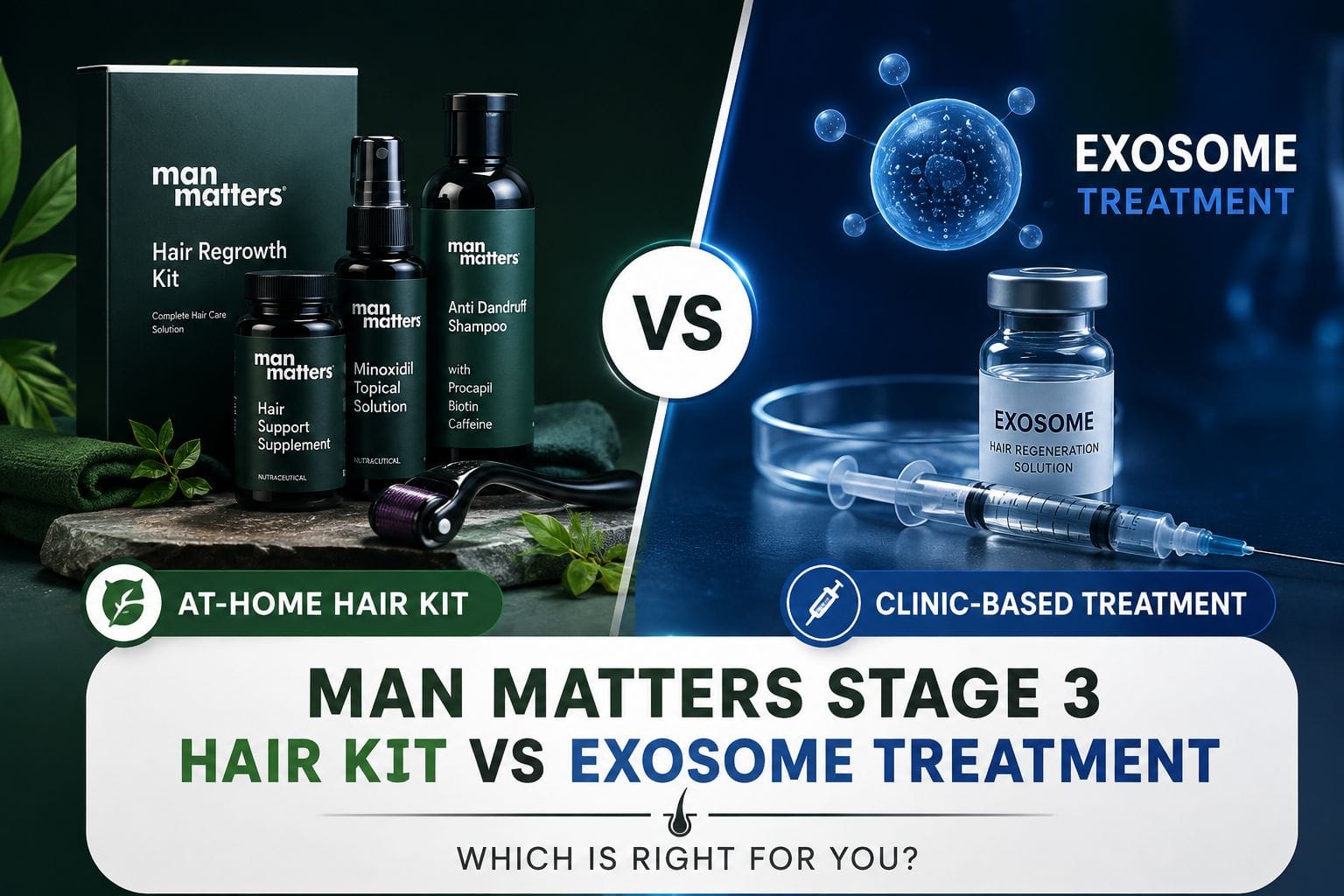
Two names keep popping up in those conversations: PRP GFC (Growth Factor Concentrate) and exosome therapy. Both promise to wake up dormant hair follicles without surgery. Both involve injections into your scalp. Both cost real money, hundreds to thousands per session. And both have clinics shouting from the rooftops that theirs is the miracle cure.
Here is the no-BS truth most ads will not tell you. One has over a decade of solid clinical proof behind it, while the other is newer, flashier, and still catching up on the science. This guide cuts through the hype so you can decide what actually makes sense for your hair, your budget, and your peace of mind in 2026.
What These Treatments Actually Are (No Medical Jargon, Promise)
PRP GFC: Your Own Blood, Turned Into a Hair-Boosting Power Shot
PRP stands for Platelet-Rich Plasma. The GFC upgrade, which means Growth Factor Concentrate, takes the classic treatment and makes it stronger. Here is exactly how it works in plain English.
A nurse draws about two small tubes of your blood (less than what you would give at a regular blood drive). That blood goes into a special centrifuge machine that spins at high speed. This separates the platelets, the tiny cells packed with healing proteins called growth factors. In the GFC version, those growth factors get extra concentrated so you are not just getting plasma. You are getting a super-charged dose of the exact signals your body already uses to repair tissue and grow new cells.
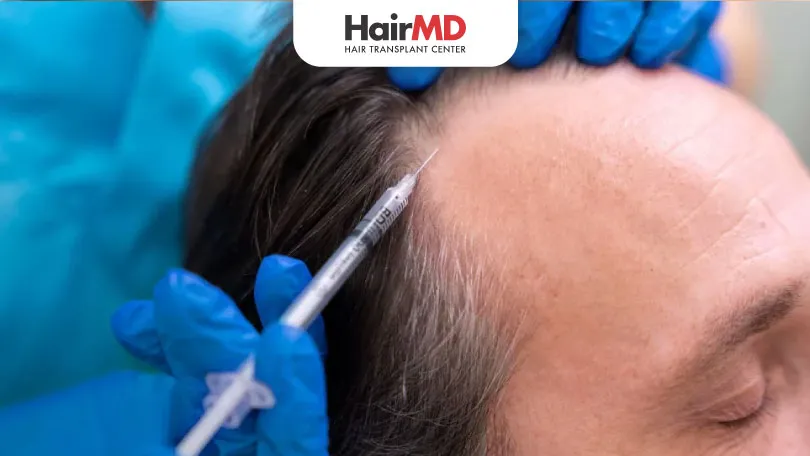
The doctor then injects this golden liquid straight into the thinning areas of your scalp using tiny needles. The growth factors tell your follicles to stay in the active growth phase longer, improve blood flow, and reduce inflammation. Because it is 100 percent from your own body, your immune system recognizes every drop. No allergic reactions. No rejection.
Think of PRP GFC like giving your scalp its own natural fertilizer. You are not bringing in anything foreign. You are just supercharging what your body already knows how to do.
Exosome Therapy: Tiny Messengers Delivering Next-Level Instructions
Exosomes are basically microscopic delivery trucks that cells use to talk to each other. They carry proteins, RNA, and signaling molecules that tell other cells what to do. Grow. Repair. Calm down. Wake up.
In hair-loss clinics, the exosomes usually come from lab-processed stem cells (often donated umbilical cord or placental tissue). The lab concentrates these tiny vesicles into an injectable solution. When the doctor puts them into your scalp, the exosomes do not become new cells. They just deliver precise instructions to your existing follicles: reduce inflammation, restart growth cycles, and improve the whole environment around each hair root.
If PRP GFC is using your own compost, exosome therapy is like hiring a top-tier consultant who shows up with a binder full of exact directions for your scalp employees. It sounds cutting-edge and it is. But it is also newer, less standardized, and still navigating regulatory waters in the United States.
What the Evidence Actually Shows (The Studies, Not the Sales Pitches)
PRP GFC Has the Track Record Americans Can Trust
PRP for hair loss has been researched for more than ten years. We are talking real randomized controlled trials, the gold standard where one group gets the real treatment and another gets a placebo or standard care. Systematic reviews (big papers that combine dozens of studies) consistently show that PRP increases hair density, thickens individual strands, and boosts overall hair count in people with androgenetic alopecia (the genetic hair-loss pattern that hits both men and women).
The GFC version takes it further. Recent studies, especially from clinics that have used it widely, show even better improvements in hair density compared with regular PRP. Results are not overnight miracles, but after a series of sessions, most patients see measurable changes under trichoscopy (a special scalp camera doctors use). It works best on early-to-moderate thinning. Think Norwood 2-4 for guys or Ludwig 1-2 for women.
Important reality check: PRP GFC is not a cure. It does not bring back completely dead follicles or reverse a shiny bald scalp. Results typically last 6 to 12 months, which is why most people schedule maintenance sessions. But for the money and the low risk, the science backs it up solidly.
Exosome Therapy Is Exciting But Still in the Promising Stage
Early studies and case reports look good. Patients often report less shedding, thicker hair, and visible regrowth, especially when exosomes are used after a hair transplant or alongside PRP. Some dermatologists who have tried both say certain patients who stalled on PRP alone suddenly started responding.
Here is the catch that every honest provider will tell you. There still are not any large-scale, peer-reviewed randomized controlled trials specifically for exosome hair therapy as of 2026. The FDA has not approved any exosome product for hair loss or for any medical use, for that matter. The agency has even issued public warnings about unapproved exosome products being sold directly to consumers, pointing out that safety and effectiveness data simply are not complete yet at the regulatory level.
This does not mean exosomes do not work. Science moves fast, and many experts believe they could eventually outperform PRP. Right now, though, choosing exosomes means accepting more uncertainty than with PRP GFC.
Safety and Side Effects: What You Need to Know Before You Book
Both treatments are considered low-risk when done right, but low-risk still deserves questions.
With PRP GFC, side effects are usually mild and short-lived: some scalp tenderness, tiny bruises, or mild swelling that fades in 2 to 3 days. Because everything comes from your own blood, allergic reactions are basically nonexistent. Infection risk is extremely low in any clean medical office.
Exosome therapy carries similar injection-related risks, but because the product comes from outside your body, the source and processing matter a lot. Reputable clinics use exosomes produced under strict GMP (Good Manufacturing Practice) standards with full Certificates of Analysis. That documentation proves the product is sterile and consistent. If a clinic cannot or will not show you that paperwork, walk away.
Red-flag questions to ask every provider:
- How many of these exact procedures have you done, and can I see real patient before-and-after photos (not stock images)?
- Walk me through your preparation and sterilization process.
- For exosomes: Where exactly do these come from, and can I see the manufacturer documentation?
- What is your plan if I do not see results after the recommended series?
A great provider answers everything clearly and never pressures you to book on the spot.
Real-World Costs: What Americans Are Actually Paying in 2026
Neither PRP GFC nor exosome therapy is covered by health insurance. They are considered elective cosmetic procedures. Pricing varies wildly depending on where you live, the doctor credentials, and what is included.
Typical PRP GFC prices:
- Single session: $500 to $1,500
- Starter series of three sessions (the minimum most doctors recommend): $1,500 to $4,000 total
Exosome therapy usually runs higher:
- Single session: $1,000 to $3,000+
- Many clinics now offer combo packages (PRP plus exosomes) that can save a little per visit but still add up fast.
Higher price does not automatically equal better results. Sometimes it just reflects expensive exosome sourcing or fancy clinic overhead. Super-cheap exosome deals, on the other hand, should make you wonder about quality and safety standards.
Smart budgeting tip: Always ask for the full 12- to 24-month plan cost upfront, including maintenance. That way there are no ugly surprises six months later.
How to Actually Decide: A Simple Framework That Works
Start here if you are new to injectable hair treatments: Go with PRP GFC first. The evidence is stronger, the safety record is longer, the price is lower, and you will learn exactly how your body responds. Many patients get great results and never need anything else. If the response is only meh after a full three-to-four-session series, you now have solid baseline data before moving to exosomes.
Consider exosomes as a next step if:
- You have already completed a proper PRP GFC series with a quality provider and still want more.
- You are okay with the extra cost and the current lack of large-scale FDA-level data.
Timing matters a lot. Both treatments work best while follicles are still alive and just miniaturizing, not completely gone. If you are in the early or moderate stages, you are in the sweet spot. If you are already at advanced thinning, a board-certified hair restoration surgeon may suggest a transplant first, with PRP or exosomes used to support healing and surrounding hair.
Clinic Lessons Learned the Hard Way (So You Do Not Have To)
People waste thousands making these common mistakes:
- Doing just one session and expecting miracles. PRP especially needs at least three sessions spaced 4 to 6 weeks apart. One treatment tells you nothing.
- Choosing a provider who does not track progress with photos and trichoscopy. Without objective measurements, you are guessing.
- Falling for slick med-spa marketing that jumped on the exosome trend without real hair-loss expertise. Look for board-certified dermatologists or IAHRS-listed hair restoration surgeons who focus on hair every day.
Frequently Asked Questions
Can I combine PRP GFC and exosome therapy? Yes and some clinics offer combo protocols that patients love. Early data suggests the two may work synergistically, but the total cost goes up.
How long until I see results? Expect 3 to 6 months for noticeable changes. Hair grows slowly. Patience is part of the process. Anyone promising faster results is overselling.
Does it hurt? Scalp injections are not fun, but most offices use strong numbing cream and tiny needles or automated guns. Most patients rate it uncomfortable but doable.
Are these treatments good for women? Absolutely. Women with diffuse thinning often see excellent results, and the clinical literature includes plenty of female patients.
What if nothing works? That is possible. Genetics, hormones, age, and nutrition all play roles. If a full series brings zero improvement, get comprehensive bloodwork and consider a transplant consultation.
The Bottom Line for 2026
PRP GFC remains the smarter starting choice for most Americans right now. It has the stronger evidence, established safety record, lower cost, and zero regulatory red flags. Exosome therapy is genuinely promising and may become the future of hair restoration but today it still carries more uncertainty and a higher price tag.
The best move? Book a consultation with a board-certified dermatologist or hair restoration specialist who offers both options. Bring this article with you. Ask every question on the list above. Walk in with realistic expectations, commit to the full treatment series, and track your results honestly.
Hair loss feels personal and frustrating, but you do not have to throw money at the newest shiny thing. Start with what the science actually supports, choose a provider you trust, and make decisions based on facts, not fear or FOMO. Your future hairline (and your wallet) will thank you.
References:
Here are credible references supporting the key claims in the article about PRP GFC vs. exosome therapy for hair loss. These come from peer-reviewed studies, systematic reviews, meta-analyses, and official sources (mostly PubMed, PMC, journals, and FDA). I’ve focused on high-quality, recent evidence (up to 2025–2026 where available) to back up the science, evidence levels, safety, and regulatory points.
PRP and GFC for Androgenetic Alopecia (Evidence and Comparisons)
- Zhang X, et al. (2023). Platelet-Rich Plasma for Androgenetic Alopecia: A Systematic Review and Meta-Analysis of Randomized Controlled Trials. Journal of Cutaneous Medicine and Surgery. https://pubmed.ncbi.nlm.nih.gov/37533146 (Shows PRP increases hair density at 3 and 6 months vs. placebo in RCTs.)
- Gentile P, et al. (2020). Systematic Review of Platelet-Rich Plasma Use in Androgenetic Alopecia Compared with Minoxidil, Finasteride, and Adult Stem Cell-Based Therapy. PMC. https://pmc.ncbi.nlm.nih.gov/articles/PMC7216252/ (Comprehensive review supporting PRP efficacy in AGA.)
- Garg S, et al. (2026). Clinical and Trichoscopic Analysis of PRP Versus GFC Used for Male and Female Pattern Hair Loss. PubMed. https://pubmed.ncbi.nlm.nih.gov/40557953 (Direct comparison: GFC showed better early hair count and diameter improvements than PRP, with PRP offering more sustained effects.)
- Bhargava A, et al. (2024). Revitalizing Hair Growth: A New Regimen Utilizing Growth Factor Concentrate for Hair Loss Treatment. PMC. https://pmc.ncbi.nlm.nih.gov/articles/PMC11283646/ (Promising results for GFC as a refined PRP alternative in AGA.)
- Shah R, et al. (2023). A Randomized Control Trial Comparing the Efficacy of Platelet-Rich Plasma and 5% Topical Minoxidil for the Treatment of Androgenetic Alopecia. Journal of Drugs in Dermatology. https://jddonline.com/articles/a-randomized-control-trial-comparing-the-efficacy-of-platelet-rich-plasma-and-5-topical-minoxidil-for-the-treatment-of-androgenetic-alopecia-S1545961623P0905X (PRP superior to minoxidil in some demographics.)
Exosome Therapy (Promising but Limited Evidence)
- Al Ameer MA, et al. (2025). Exosomes and Hair Regeneration: A Systematic Review of Clinical Evidence Across Alopecia Types and Exosome Sources. Clinical, Cosmetic and Investigational Dermatology. https://pmc.ncbi.nlm.nih.gov/articles/PMC12433634/ (Reviews 11 studies showing improvements in hair density/thickness with MSC-derived exosomes; notes need for more standardized RCTs.)
- Amini F, et al. (2025). A Pilot Randomized Controlled Trial (RCT) Evaluating the Efficacy of an Exosome-Containing Plant Extract Formulation for Treating Male Alopecia. Life. https://www.mdpi.com/2075-1729/15/3/500 (Pilot RCT showing potential efficacy in male AGA.)
- Koumprentziotis IA, et al. (2025). Microneedling Radiofrequency Followed by Topical Exosome Application Therapy for Pattern Hair Loss: A Scoping Review and Prospective Study. ScienceDirect. https://www.sciencedirect.com/science/article/abs/pii/S0738081X2500207X (Positive increases in density/diameter with high satisfaction; no serious adverse events.)
FDA Regulatory Warnings on Exosomes
- U.S. Food and Drug Administration (FDA). (2019, updated). Public Safety Notification on Exosome Products. https://www.fda.gov/vaccines-blood-biologics/safety-availability-biologics/public-safety-notification-exosome-products (No FDA-approved exosome products; warnings about unapproved marketing and serious adverse events reported.)
- U.S. Food and Drug Administration (FDA). (2020). Consumer Alert on Regenerative Medicine Products Including Stem Cells and Exosomes. https://www.fda.gov/vaccines-blood-biologics/consumers-biologics/consumer-alert-regenerative-medicine-products-including-stem-cells-and-exosomes (Encourages reporting of adverse events; reiterates no approved exosome products.)
- FDA Warning Letter to Supreme Rejuvenation, LLC (2025). https://www.fda.gov/inspections-compliance-enforcement-and-criminal-investigations/warning-letters/supreme-rejuvenation-llc-700749-05052025 (Example of enforcement against unapproved exosome marketing claims, including for hair growth.)
Costs (U.S. Estimates, 2025–2026)
- Rain’s Skin Prescription (2026). PRP Hair Restoration Cost: A 2026 Price Guide. https://rainsskinprescription.com/prp-hair-restoration-cost-guide (Single PRP session: $500–$2,500; varies by location/expertise.)
- Novuskin (2026). The Real PRP Treatment Cost for Hair in 2026. https://www.novuskin.com/cost-prp-hair-loss (Per session: $600–$3,500; initial series often $1,500–$9,000+.)
These sources align with the article’s balanced view: PRP/GFC has stronger, longer-established evidence from multiple RCTs and meta-analyses, while exosomes show promise in early/pilot studies but lack large-scale approval and carry regulatory uncertainty per FDA. Always check the latest publications, as research evolves quickly. If you’re considering treatment, consult a board-certified dermatologist for personalized advice.